





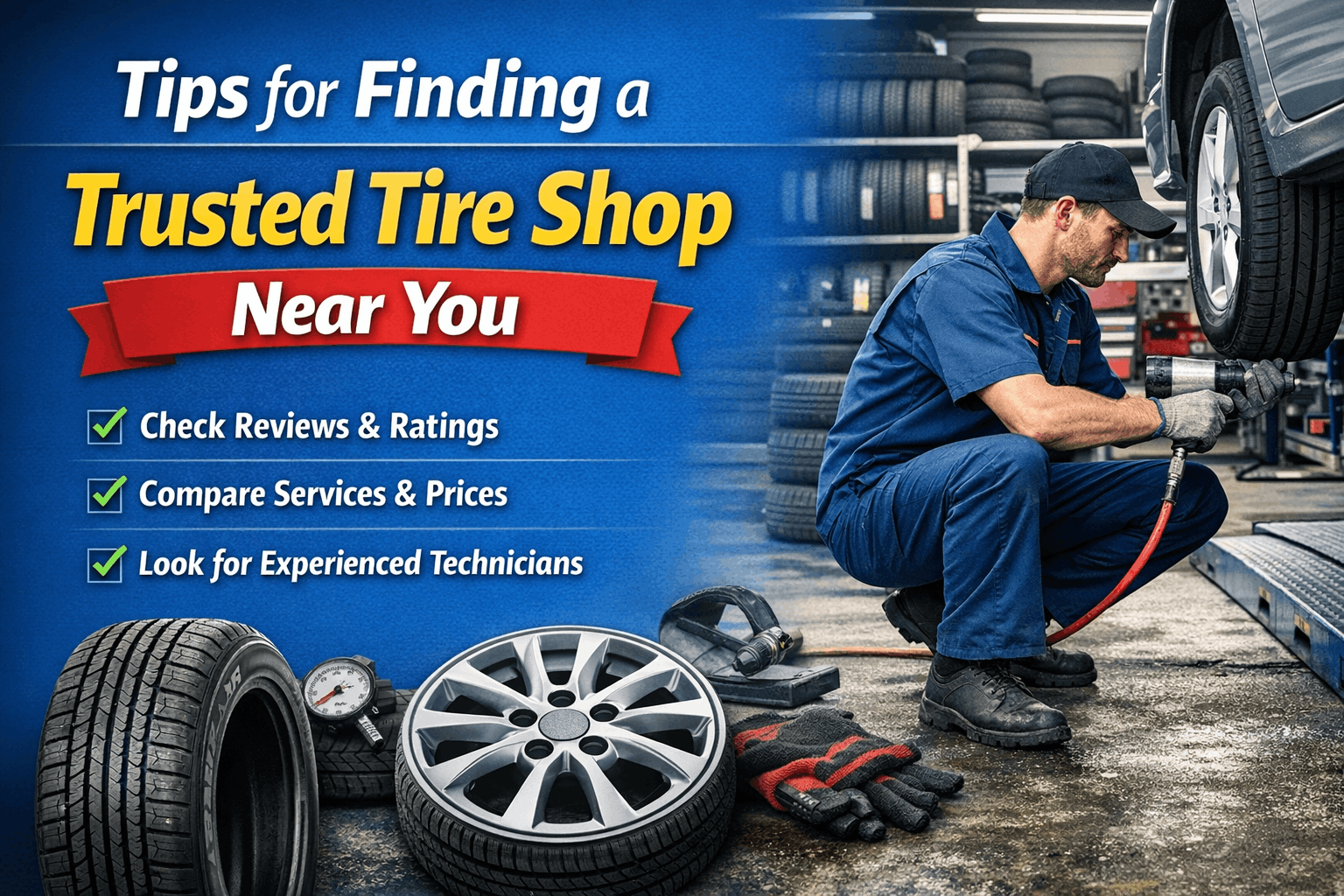
Your tires do far more than just keep your car moving. They help transport you from one place to another, from work to home, to the store, and vice versa. The truth is that these parts do more than what people see. They influence your safety on the road, fuel efficiency, comfort of the trip, as well as handling in rainy and snowy conditions.
That is why, when you decide to get your tires repaired, replaced, or checked, it is crucial to make the proper choice. It is really important, especially for the car owners who underestimate it.
I understand. There are so many tire shops that it can feel overwhelming. You can easily get lost. Some shops lure you in with low prices but provide terrible service. Others try to upsell you on services you don’t need. If you’re driving in the States, here’s the deal, avoid catchy ads and giant billboards. Instead, find a shop with a good reputation, a history of service, and a real commitment to customer care.
This guide is meant to help you navigate through confusion. You can walk into a shop feeling informed and keep your car running safely and smoothly.
Why Choosing the Right Tire Shop Matters
Look, a good tire shop isn’t just a place to buy tires. It’s the place where skilled professionals work to keep you secure while driving. Services like installation, balancing, rotation, and alignment checks are all part of the package.
When are you going to discover an acceptable local retailer? It’s much easier to receive reliable information. The SearchNova360 commercial guide is just what you need to choose the best tires that will suit your car in relation to your budget limitations and weather conditions in your region.
1. Start with Online Reviews and Ratings
In all honesty, go to Google or Yelp. Read the reviews. They will give you a clue about whether they overcharge, how long they take, and whether they have any idea what they are doing.
But avoid getting hung up on one negative review or one extremely positive one. Look for trends. For example, when multiple reviewers write something such as, “They told me the truth,” “They got me in and out quickly,” or “The employees were really friendly,” there is cause for hope.
On the other hand, If you keep seeing the same complaints about hidden fees, under-rated work, or waiting hours for a simple tire patch, what do you do? Run.
A shop with solid ratings and a bunch of reviews mentioning good service and honest work? That’s usually worth checking out.
2. See What Services They Actually Offer
Okay, so a tire shop that just sells tires? That’s not enough. You want a place that can actually take care of your tires over time. Like, the whole package.
Here’s what a decent shop should be able to do:
- put new tires on and balance them
- patch a flat
- rotate your tires so they wear evenly
- check your wheel alignment
- look at tire pressure
- measure how much tread you’ve got left
- replace old tires when it’s time
A place that does all this stuff? They’re way more likely to handle whatever comes up. Plus, it saves you a lot of time. You don’t have to drive to one shop for a patch, another for rotation, or somewhere else for alignment. That’s just a headache.
3. Ask About Tire Brands and Options, But Don’t Let Them Shove the Expensive Stuff Down Your Throat
Here’s the thing. Not everyone needs the same tire. A good shop will actually ask you questions first. Like, what do you drive? Do you do mostly highway miles or city driving? Where do you live? Does it snow a lot? What is your budget?
For instance, a person driving long distances on the highways daily requires a different tire from an individual who travels only within town to run errands. Indeed, all-season tires can work perfectly well for many individuals, but for someone living in areas experiencing harsh winters, snow tires could come in handy. There are other factors like having a sports vehicle requiring a specific tire type.
If you decide to visit a reputable local tire dealer, he or she will advise you on the best tire to purchase, giving reasons to justify their choice. However, if a sales agent takes luxury to show you only the most expensive tires in the shop and declares them necessary for you, be vigilant.
4. Compare Prices, But Don’t Just Consider the Cheapest One
Let me get this straight. We all like good deals. But what happens is that the absolute lowest prices always come back to bite you in the ass.
What ends up happening is that these prices translate into poor quality tires or poor installation, or something is left out, and you have to pay for it on your own.
So, when you’re comparing shops, ask for a detailed breakdown. What’s included? They should be able to tell you:
- how much the tires actually cost
- installation fees
- balancing charges
- valve stems or disposal fees (yeah, some shops tack those on)
- warranty info
- any extra labor costs
A good, affordable tire shop will be upfront about pricing. Not hiding things in fine print. And honestly? In most cases, fair pricing combined with quality work is preferable to the cheapest price combined with poor service.
5. Look for Experience and Knowledge
Tires aren’t rocket science, but there’s skill involved. If someone messes up the installation or balancing? You’ll feel it. Uneven wear, weird vibrations, bad handling, and even safety problems.
That’s why experience matters.
Pick a shop where the people actually know their stuff and don’t mind answering questions. They should be able to explain tire sizes, speed ratings, tread patterns, and basic maintenance without making you feel dumb.
Honestly, when does a team take the time to teach you a little instead of just rushing you out the door? That usually means they actually care. And that’s the kind of shop you want. SearchNova360 has listed an experienced and authorized automotive business in their business directory for customer help.
6. Ask About Warranties: Seriously, Just Ask
A shop that’s confident in its work won’t hesitate to offer a warranty. So, before you hand over your credit card, just ask. Do they warranty the tires? The repair work? The installation?
Some shops will give you road hazard protection. Or a tread life warranty. Or they’ll cover certain repairs for a set of hours. Others might throw in free tire rotations for a year or something.
When a shop puts its money where its mouth is with clear warranty terms, that tells you they trust what they’re selling and installing. And that gives you some peace of mind, which is worth a lot when you’re spending real money on new tires or repairs.
7. Pay Attention to Customer Service
To be honest, just by entering a store and observing how the employees behave, you may discover a lot about it. Are they courteous? Patient? Are they paying attention to you? That is a positive idea.
But if they’re dismissive, or way too pushy about selling you stuff, or act like your questions are annoying? Yeah, keep looking.
There are plenty of other shops out there.
You should feel totally fine asking about prices, services, or just getting a recommendation from a good tire shop. That’s what they’re there for. Especially if you don’t know a whole lot about tires or cars in general, hey, nobody’s born knowing this stuff. A good shop won’t make you feel dumb asking questions. Ever.
The best places? They treat you like they want your business for years, not just for one sale and done. You can feel the difference. They remember you. They don’t rush you. They actually seem to care.
8. Look Around the Shop
Okay, this might sound a little picky but hear me out. You don’t need a fancy showroom. But a clean, organized shop usually means they care about what they do.
Look at the waiting area. The service bays. Where do they store tires? Does it look reasonably clean and put together?
Is the place a total mess? Cluttered, dirty, chaotic? That might mean they’re disorganized in other ways too, like scheduling, or how they handle repairs, or even basic customer service. So, if you can, stop by in person before you commit to any big tire job.
9. Ask About Wait Times and Appointments
Let’s be real. Most of us need our cars every single day. So, convenience matters. Some shops can get you on the same day. Others might be booked out for a week. Just ask.
Also ask how long a typical service takes. Do they take walk-ins? What happens if they run late? A decent shop will be straight with you about timing. If they promise something that sounds too good to be true? They might just be trying to get you in the door.
The fast service is nice. But good, honest work is way more important.
10. Choose a Shop That Supports Long-Term Tire Care
The best tire shops don’t just sell you tires and wave goodbye. They actually help you take care of your tires over time. That means reminders, checkups, and good advice.
A good shop might tell you things like the following:
- how often to rotate your tires
- when to get your alignment checked
- how to keep an eye on air pressure
- what uneven wear looks like
- when it’s time to replace them
Little tips like that? They save you money in the long run. And they help keep you safer on the road. That’s the kind of shop worth sticking with.
Warning Signs to Avoid
While you’re looking for a good tire shop in the US, keep an eye out for these red flags:
- prices that aren’t clear or keep changing
- someone pushing you to buy right this second
- they won’t explain what they’re doing or why
- bad reviews that say the same thing again and again
- no warranty info or they dodge the question
- they only sell tires and can’t do basic stuff like rotations or alignments
- staff seems rushed, annoyed, or barely talks to you
Bottom line: If something feels off, trust your gut. There’s always another shop.
Conclusion
Hence, locating an excellent tire store is not as difficult as one might think. If one knows what features to pay attention to, the choice becomes much simpler. An ideal tire store is supposed to offer reasonable prices, favorable customer feedback, high-quality tires, and qualified specialists. Moreover, such stores should spend a little bit of time on understanding customers’ requests rather than trying to sell extra services.
It may concern replacing one damaged tire, purchasing a complete set of wheels, or inspecting the existing tires. Regardless of whether it is necessary to make repairs or change the entire set, choosing a competent tire store will make a significant difference. The car will perform much better, which will positively influence drivers’ overall experience behind the wheel.
Therefore, it would be wise to choose a tire store carefully. It is advisable to research different options thoroughly and compare several stores. Ultimately, it will be beneficial for both drivers and tire shops.